
Digital is the New Dealership: How Car-Buying is Shifting Online
New research from Snapchat, Havas and Alter Agents reveals how car-buying has shifted to online, with social being a key driver.
Auto sales have recovered robustly since 2020, surpassing pre-pandemic levels. But while sales are forecast to continue rising through 2025 1, the marketplace has changed dramatically. Digital channels and social platforms are now a key driver of showroom traffic and vehicle sales, and automotive brands need to evolve their marketing strategies.
To understand the modern path to purchase and help auto brands connect with buyers where they are, we partnered with Havas and commissioned market research consultancy Alter Agents who surveyed over 5,000 social media users who recently bought a car or are currently in the market across five key markets (US, UK, DE, NO, KSA). Here’s what we found:
What’s Driving Auto Buying Today
An improved financial situation is the primary driver for 44% of younger shoppers (Gen Z and Millennials) purchasing new vehicles, compared to 34% amongst Gen X. Younger shoppers are more inclined to splurge on new vehicles compared to older generations, which is reflected in their preference towards luxury brands.
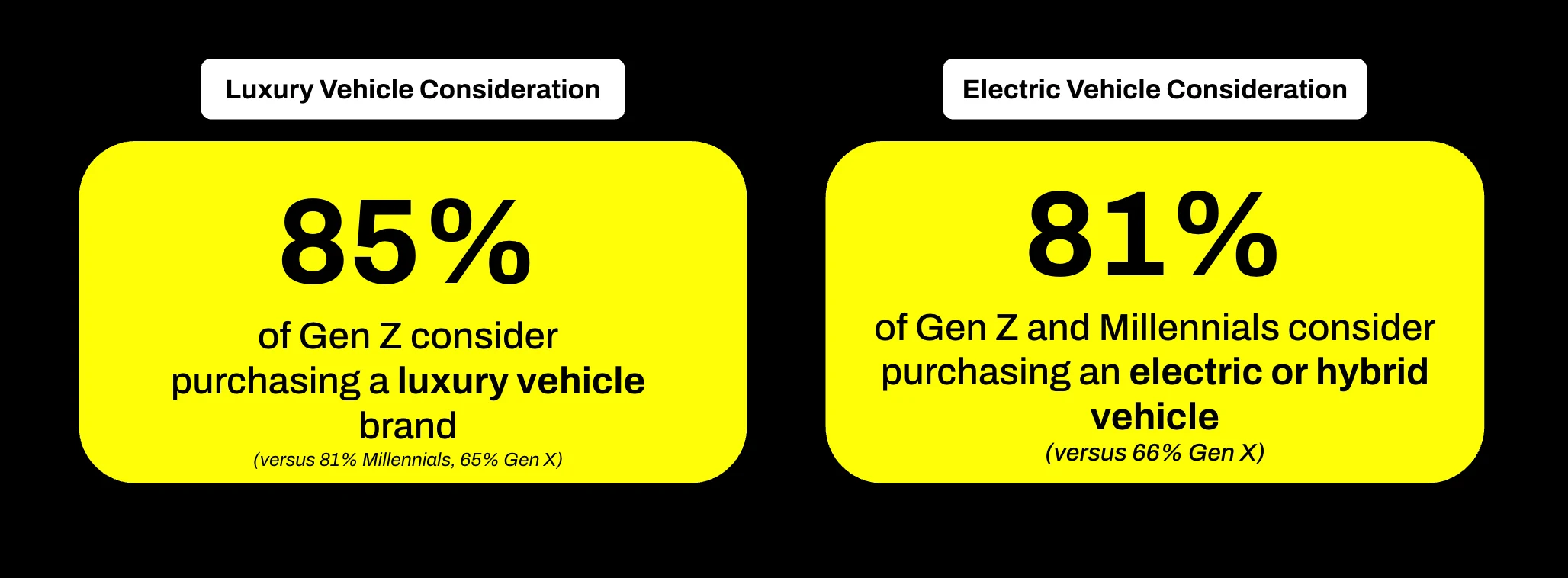
While one of Gen X's primary motivations for buying an EV or hybrid is to reduce their environmental impact, younger buyers are driven by more immediate, practical, and tech-focused concerns:
Saving money on fuel (46% of respondents)
Exciting technology and innovation (37%)
A smooth, quiet driving experience (37%)
Notably, Snapchatters stand out, as they are 1.2x more likely than non-Snapchatters to consider an EV or hybrid purchase.
Digital is Key to the Auto Purchase Journey
Vehicle shopping has moved decisively away from traditional in-store experiences to a digital-first journey. The entire process—from initial research to final purchase—is shifting online, particularly among younger shoppers
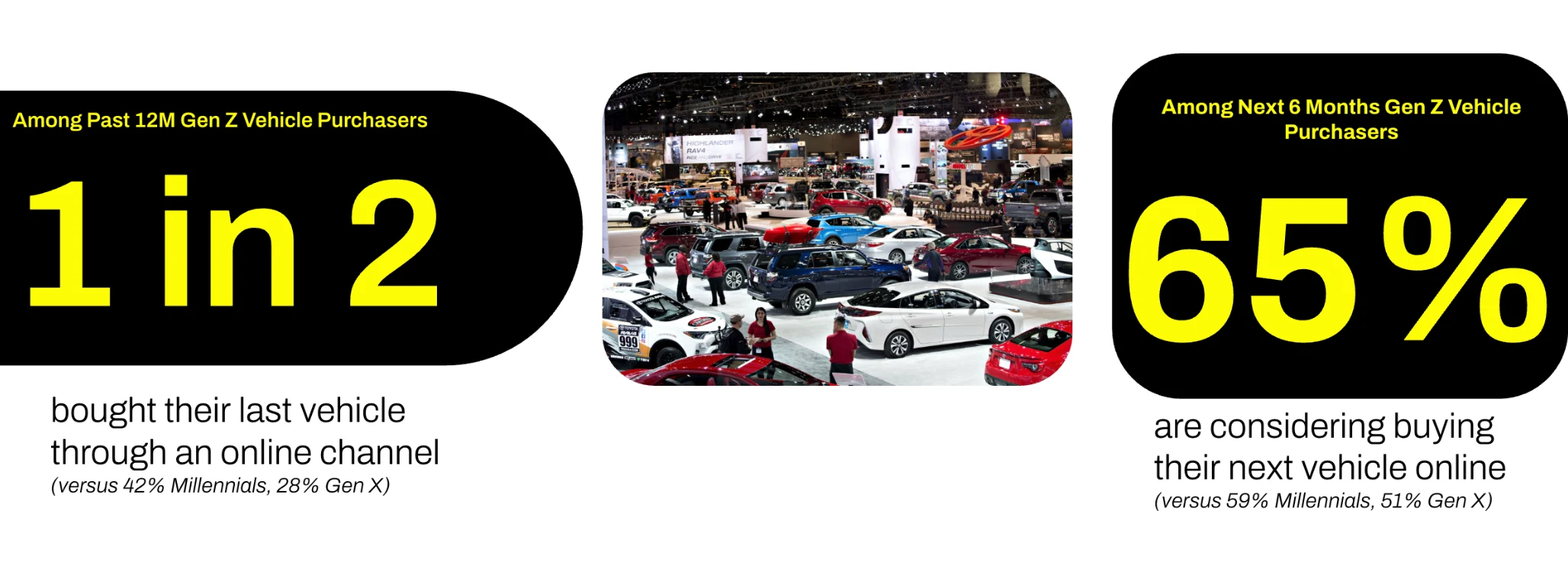
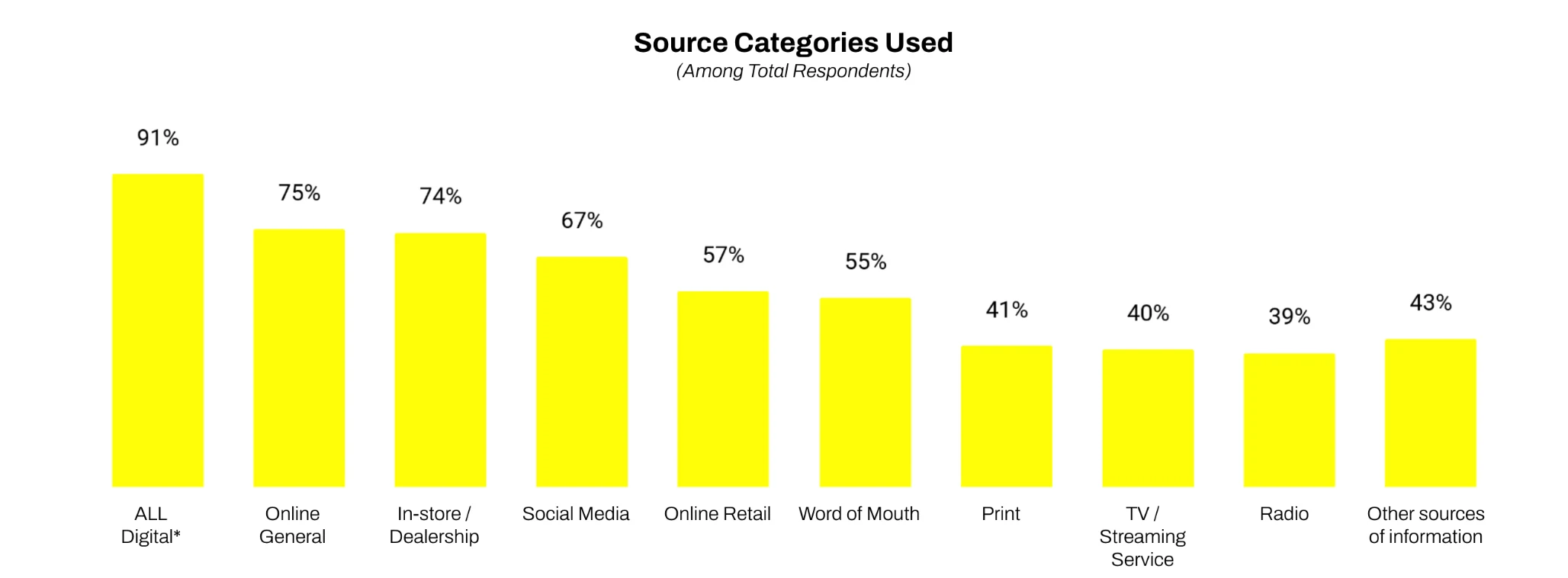
The lead-up and research stages heavily rely on online sources: 91% use digital sources during their vehicle shopping, compared to print (41%) and TV (40%).
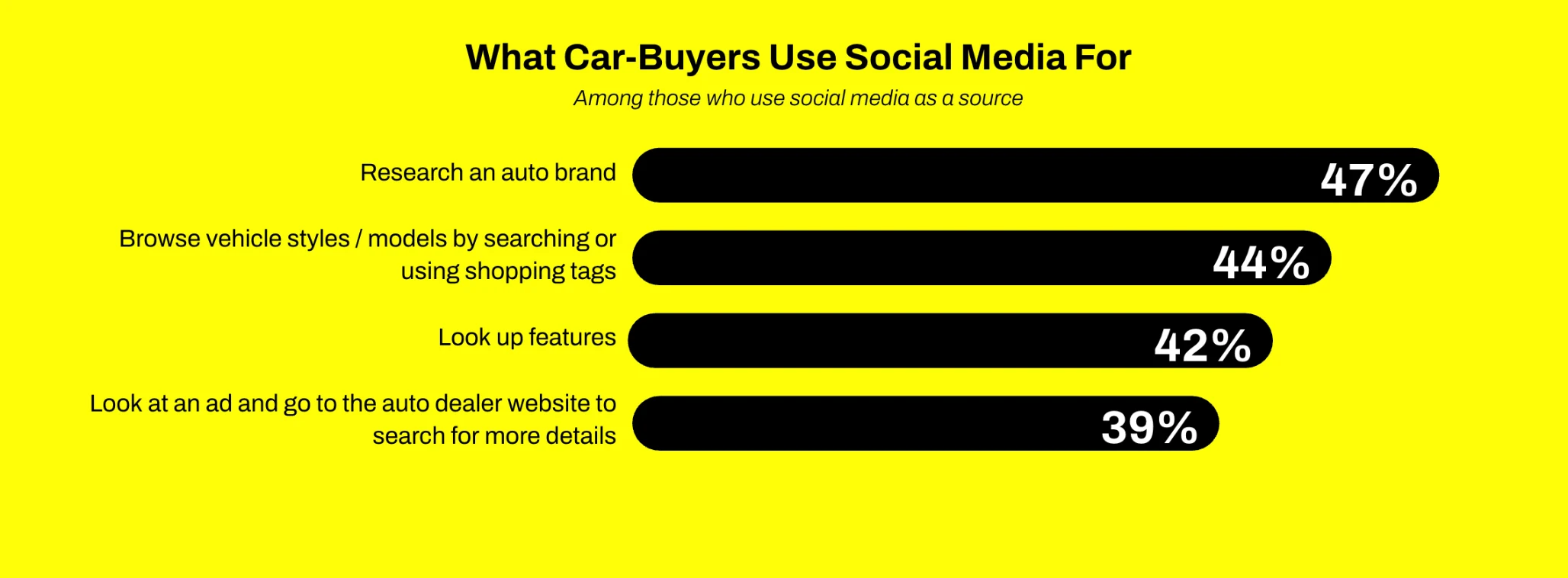
Social Media is the New Showroom
Over 60% of car-buyers use social media during their car buying journey, a figure that jumps to 74% among Gen Z. And nearly half of all shoppers use these platforms specifically to get inspiration or recommendations.
Creators are also a powerful force in the auto purchase journey, especially among younger shoppers:
69% say creators make them more aware of vehicle brands.
63% agree creators make them consider buying a brand/model based on their recommendations.
61% trust auto recommendations and reviews from creators.
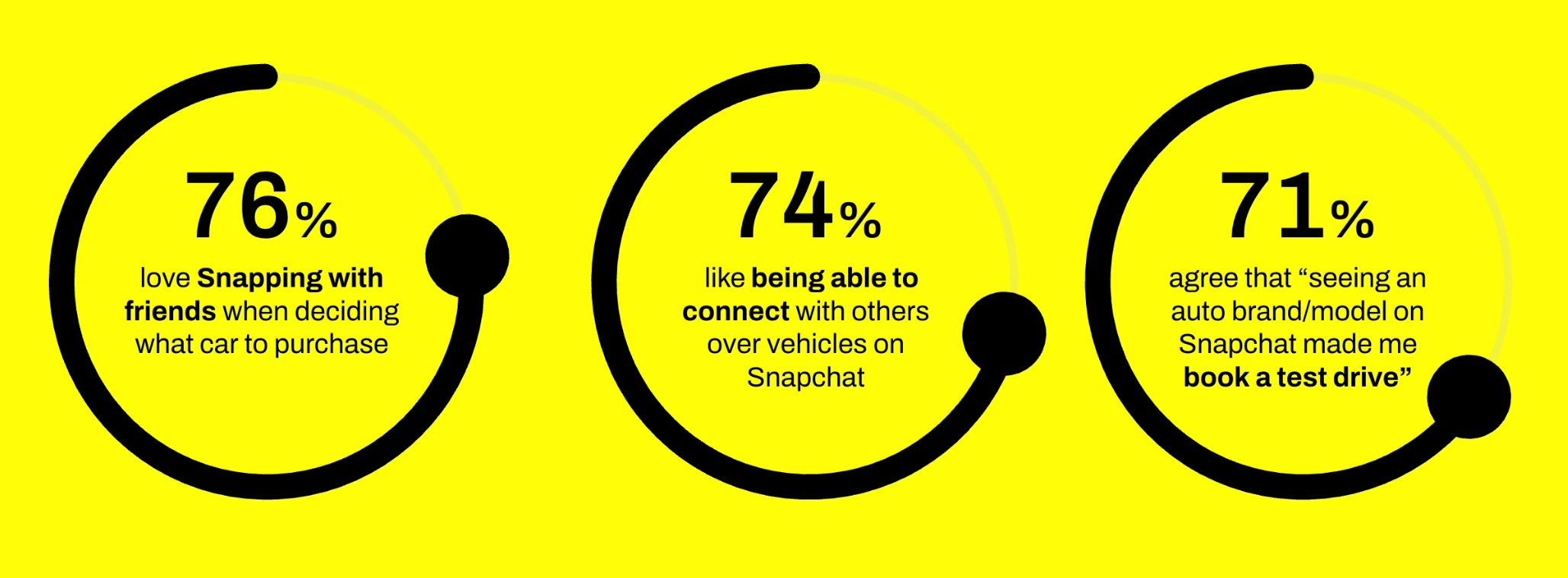
Snapchatters are particularly digital-savvy, being 1.7x more likely than non-Snapchatters to purchase a vehicle after seeing it on social platforms.
AR transports the retail experience to the living room
Augmented Reality (AR) technology is adding a new dimension to car shopping. Currently, 2 in 5 shoppers use AR features when researching a vehicle, and the opportunity is huge: 43% don't currently use AR but would like to. 37% of those who currently don't use AR would like to use it to virtually visit a car dealership or to see what the vehicles look like in their space.

Snapchatters specifically are highly engaged with AR, being 2.5x more likely than non-Snapchatters to have used AR while looking for their recent vehicle purchase. Shoppers are leveraging AR to:
Customize vehicles
Discover new brands
Virtually visit a car dealership

🔑 Key Takeaways for Automotive Brands
The auto purchase journey has fundamentally shifted from traditional, in-person discovery to a digital-first experience driven by Gen Z and Millennials.
Gen Z has a different approach to car buying - Media planning must be generation-specific: Marketers can no longer use a single, unified message for all age groups. They must develop two distinct campaigns: one for the younger, technologically motivated EV/hybrid buyer, and one for the Gen X buyer who are still more focused on traditional ICE benefits, such as range and refuelling convenience.
Budgets must pivot to social and creator partnerships: Brands have to show up on influential touchpoints like social media and create engaging experiences with creators, as this is where they spend time during their shopping journey.
AR complements the vehicle shopping journey - A brand that offers a compelling AR experience is more likely to enter a shopper's consideration set than one that does not.
More Ways To Win With Snapchat


Snapchat can help your business grow.