
Finding the Balance: How the Next Generation Navigates Relationships, Content, and Technology
New research from Snap Inc, Alter Agents and Omnicom Media delves into what makes 13-18 year olds tick, how they are navigating relationships, content and technology and how brands can find success by navigating in the middle.
To an outsider, the next generation (ages 13–18) can feel hard to decode. But the real gap isn’t the slang they use or the trends they follow. It’s how they're being interpreted. Beneath the memes and humor is a generation that feels deeply misunderstood. They’re often seen as overly reliant on technology or disconnected from the real world. In reality, they’re actively trying to strike a healthy balance in their lives, using technology to support their lives while still valuing what happens offline.
To better understand this shift, Snapchat partnered with Ominicom Media and Alter Agents to study how this age cohort, across five global markets, navigate relationships, content, and technology today. 1 Here’s what we found:
Teens With Mature Digital Habits
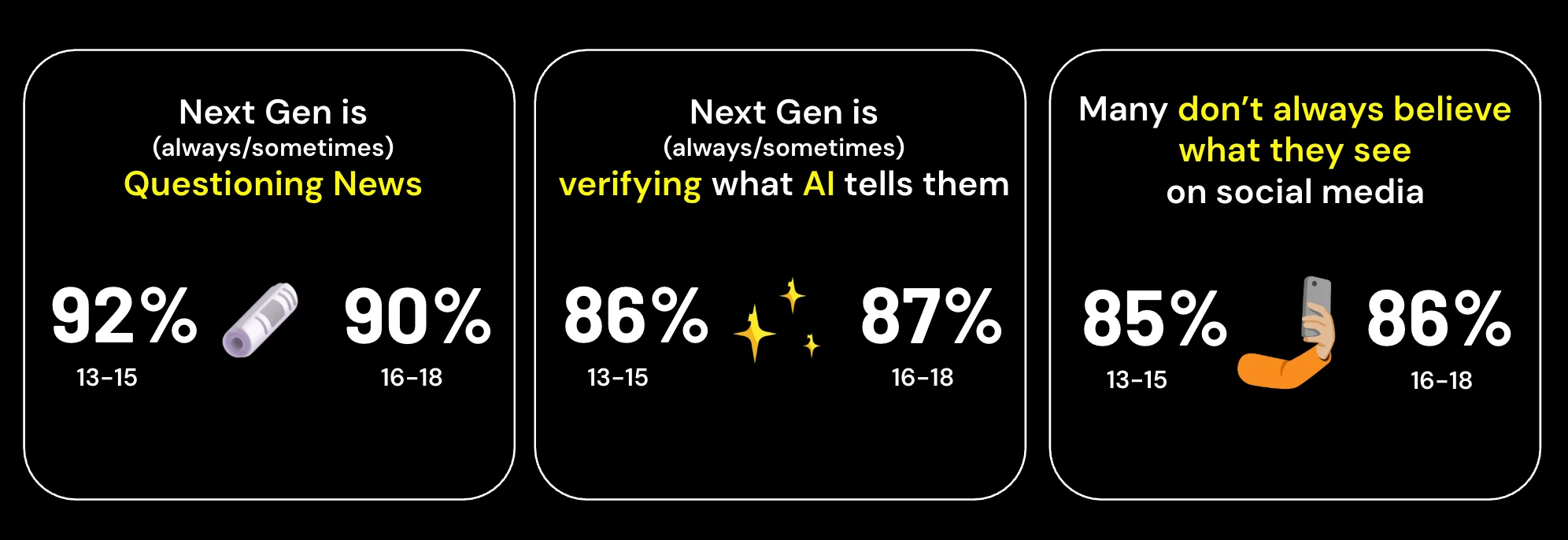
This generation hasn’t changed what it means to be a teenager. They’re still checking in with friends, gossiping, doing homework, figuring out relationships — just in more digital spaces and often on social platforms. However, they balance being teenagers with the adult habit of questioning everything they see online. They’re often fact-checking the news, verifying what AI tells them, and many don’t always believe what they see on social media. That same balance carries into how they define success.
What a Teen Wants
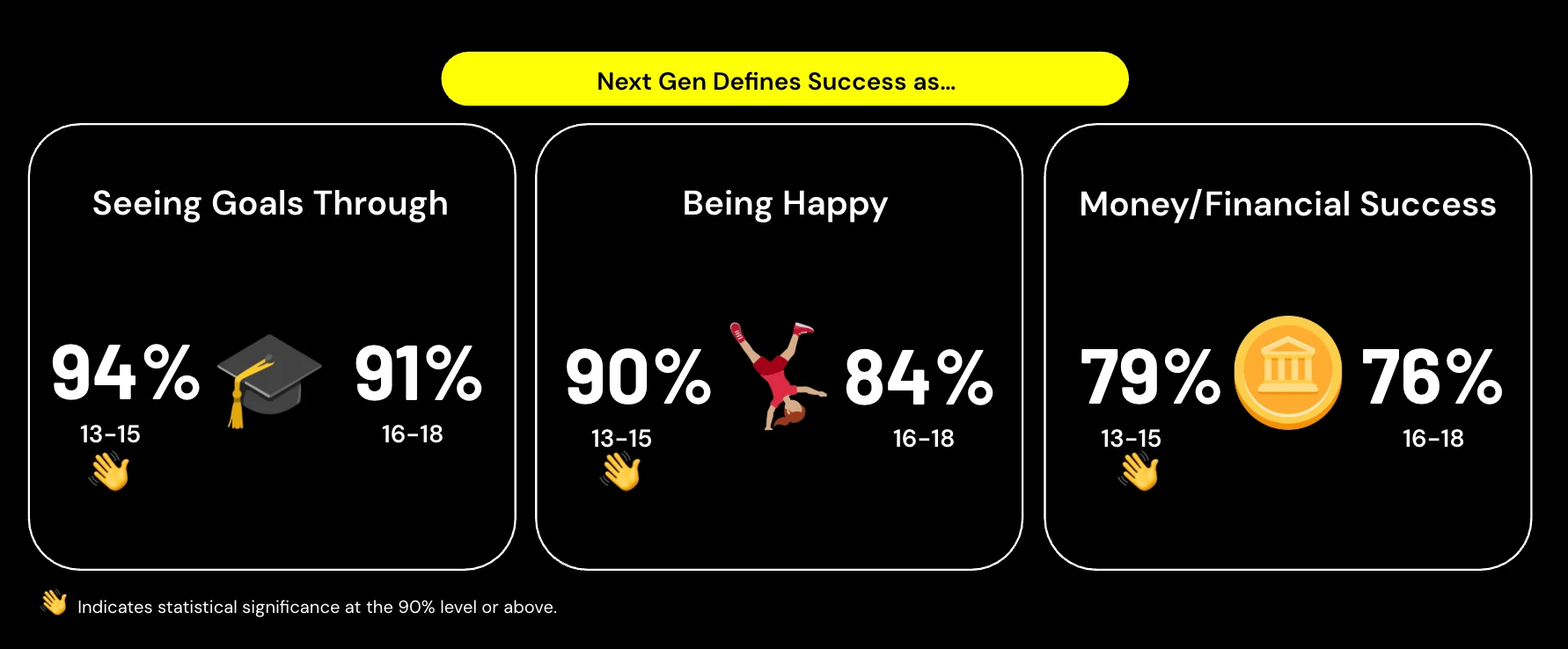
Despite what others might think, the next generation isn’t focused on just having fun. While they believe it’s okay to slow down and take breaks, they think it’s important to stay busy and productive. Success in life means being happy, financially stable, and achieving their own goals. Ultimately, they aren’t choosing between ambition and enjoyment. They’re trying to hold both at once.
When it comes to AI, it’s both a practical and playful tool for the next generation. It helps them get things done, be more creative, and have fun. Notably, younger teens (ages 13-15) are more optimistic about AI, with 55% saying it will have a mostly positive impact on their generation’s future compared to only 37% of older teens (ages 16-18). 2

Online & Offline Connection
The next generation is often described as “always online,” but the reality of how they spend their time is more nuanced. This generation values a mix of digital and real-life touchpoints when spending time with friends.
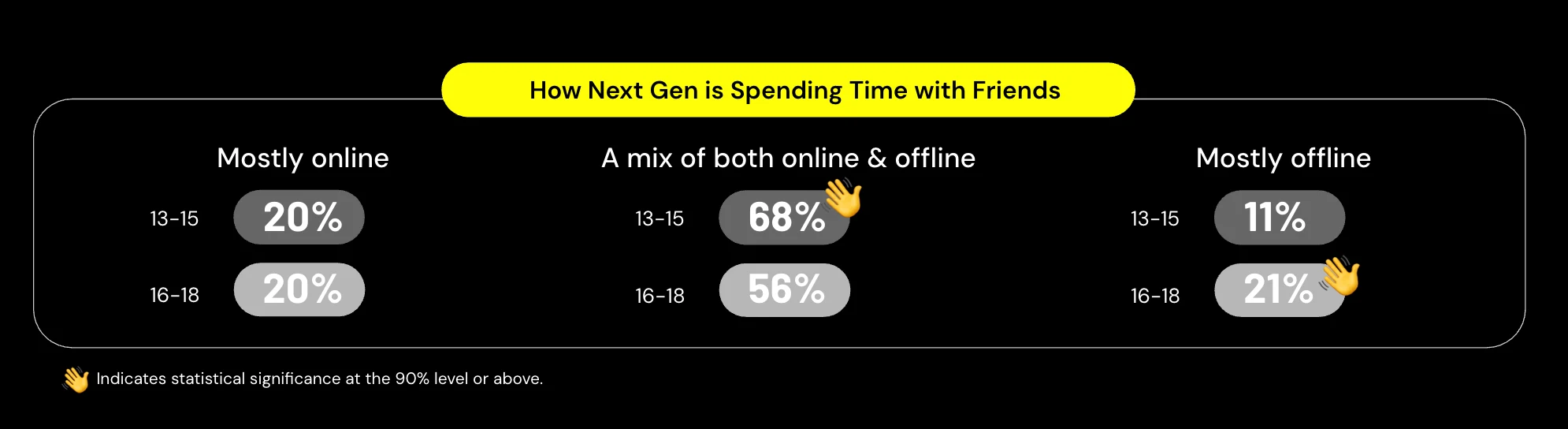
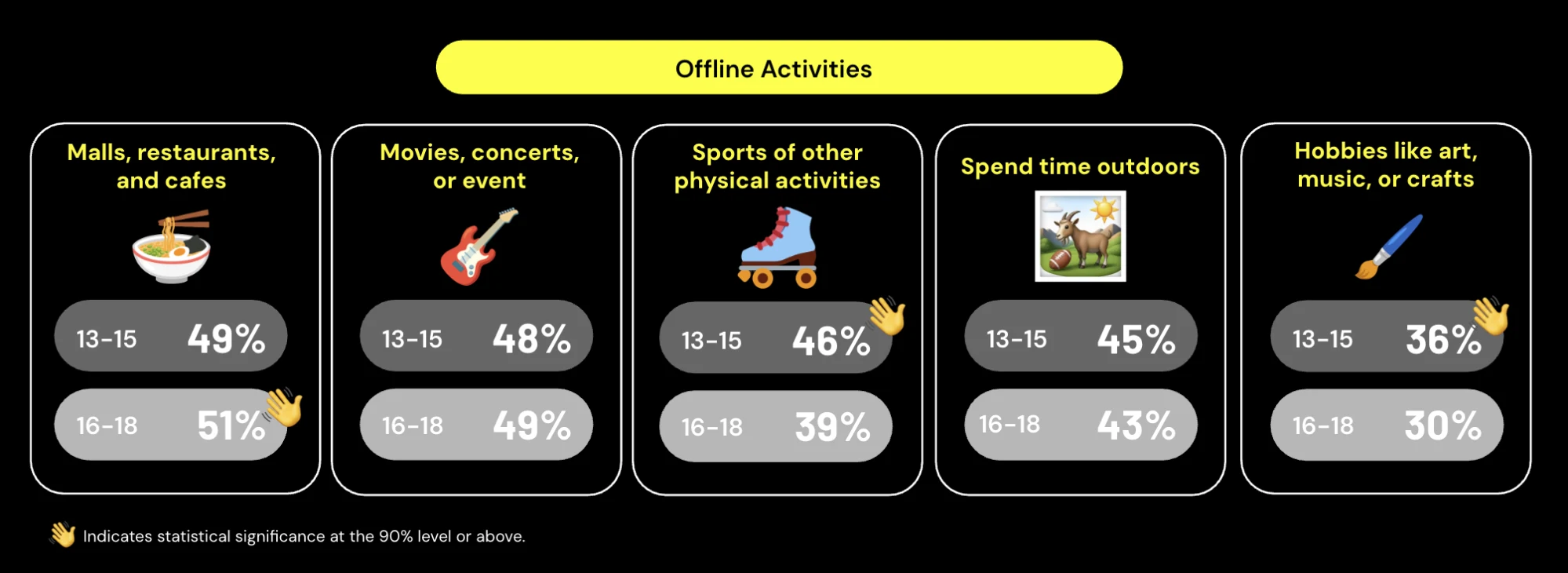
Social platforms play a central role in connecting digitally, with 66% of younger teens and 64% of older teens using platforms to communicate and keep up with friends. Moreover, 50% of younger teens and 40% of older teens use platforms to meet new friends. 2 However, this generation is still “touching grass” with IRL hangouts and enjoys spending time with their friends offline. That duality also shows up in how they engage with content.
Consuming & Sharing Content
When consuming content, the next generation moves fluidly between short-form and long-form, engaging with what they find to be the most intriguing. And contrary to myths about short attention spans, when teens watch movies and TV shows, they are genuinely entertained instead of bored and passively looking.

Creators play a central role in teens’ content experience. From mega influencers with 1 million followers to nano influencers with under 10,000, this age cohort finds them incredibly influential.
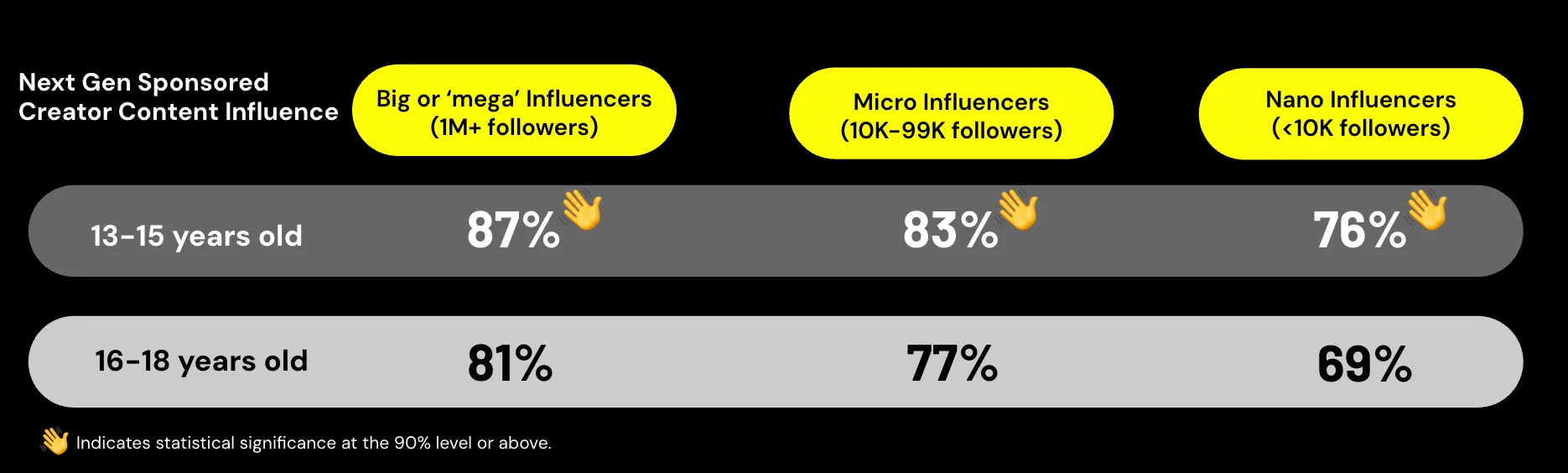
But they aren’t just passively consuming — they’re participating in the creation themselves. 74% of younger teens and 61% of older teens make their own content weekly. Additionally, 76% of younger teens and 68% of older teens share their content with others 2. This balance between consuming and creation also shapes how they think about brands.
Teens’ Expectations For Brands
Like generations before them, what’s popular still matters a lot to teens. Trends and cultural relevance play a role in what they choose to buy, with 45% of younger teens and 36% of older teens being motivated to buy from a brand if it’s cool or trendy 2.
However, that’s only part of the equation. They’re equally focused on value and quality, weighing whether something is worth the investment. 38% of younger teens and 40% of older teens say they look for products that are great value 2. For this generation, the best brands deliver both.
Understanding the Next Generation’s Balance
The next generation is often misunderstood because they don’t fit into simple categories. They’re not fully online or offline. Not purely serious or purely playful. Not driven only by trends or only by practicality. Instead, they’re constantly balancing: Balancing connection across digital and physical spaces, balancing productivity with leisure, and balancing consumption with creation.
Our research revealed a generation that is defined by two seemingly opposing characteristics: idealism and skepticism. They embrace higher-level values around achievement and personal fulfillment while exercising caution when it comes to putting their faith in content. With these traits shaping their perspectives, earning their trust will require unassailable authenticity.
Pamela Marsh, Managing Director, Primary Research at Omnicom Media
For brands, the opportunity is not to choose one side of that equation. Rather, it’s to meet them in the middle and show up in ways that reflect how they actually live, not how they’re often perceived.
More Ways To Win With Snapchat


Snapchat can help your business grow.