
May 13, 2021
May 13, 2021
The Next Inflection Point: More Than 100 Million Consumers Are Shopping with AR
The Next Inflection Point: More Than 100 Million Consumers Are Shopping with AR
Snapchat can help your business grow.
We're in a unique moment of inflection. A time when consumers are showing they love something and yet, the marketing space around it is wide open. We saw it for e-commerce, search, and mobile. Now is the moment for Augmented Reality. Consumers are excited about it, and brands have a unique chance to boost engagement, elevate consumer experiences and increase revenues. Today, there are more than 100 million consumers shopping with AR online and in stores. 1
Snap commissioned a study from Deloitte Digital and talked to 15,000 consumers across Australia, Canada, France, Germany, India, Japan, Malaysia, Mexico, the Netherlands, Norway, Saudi Arabia, Sweden, the United Arab Emirates, the United Kingdom, and the United States. We set out to understand the top consumer AR trends and what they mean for the future of gaming, shopping, communication, and media and entertainment.
The report offers a closer look at how brands can leverage AR to create personalized, engaging experiences that consumers expect. It also explores the immense future ahead for AR. Below are the top learnings that marketers and brands need to know to win in the age of augmented reality.
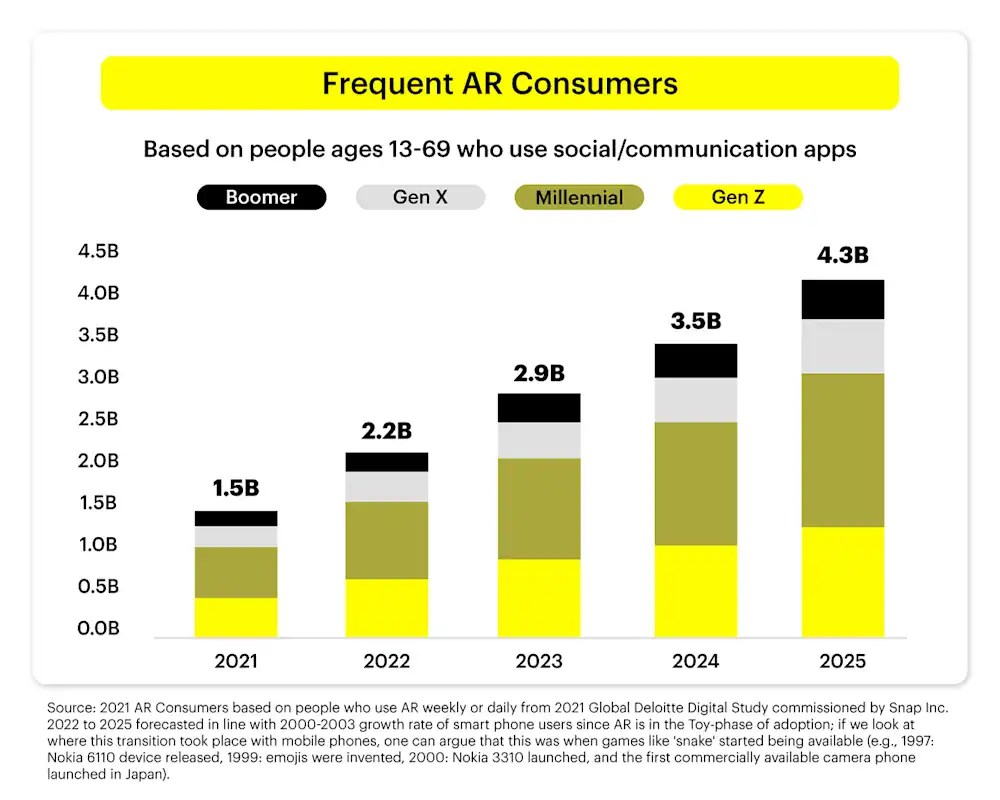
AR adoption is tracking with the mobile usage boom we saw in the mid 2000s: By 2025, nearly 75% of the global population and almost all smartphone users will be frequent AR users. 2
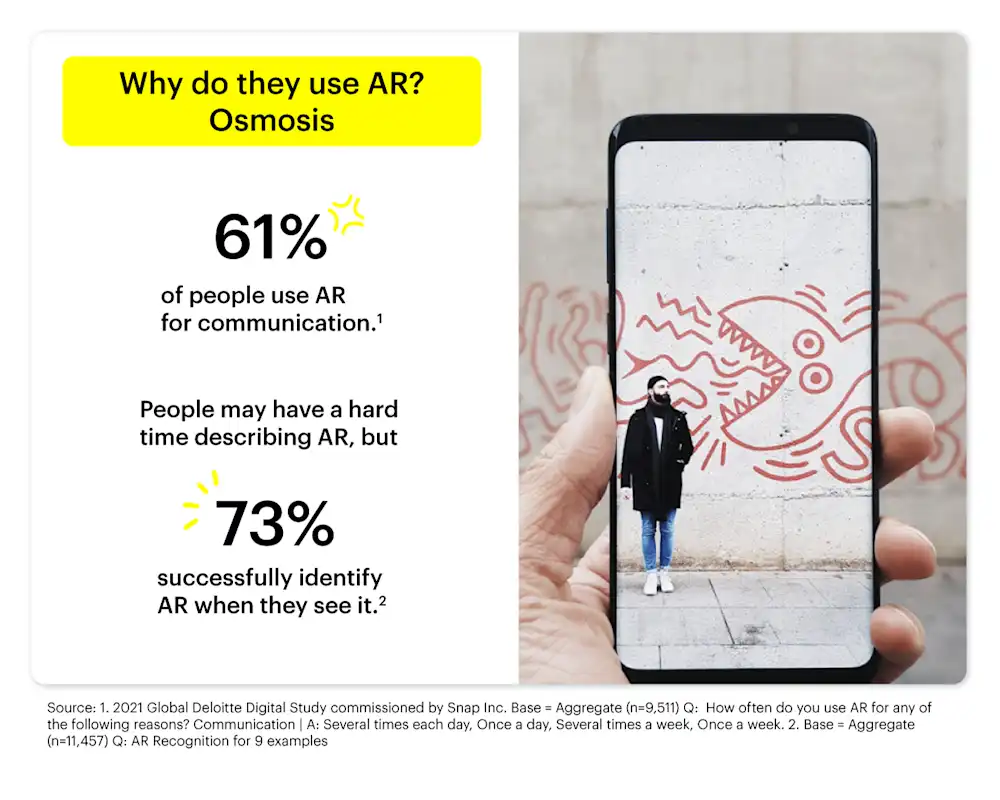
73% of people successfully identify AR when they see it, but when talking about it, they have a hard time defining or describing what it is. 3
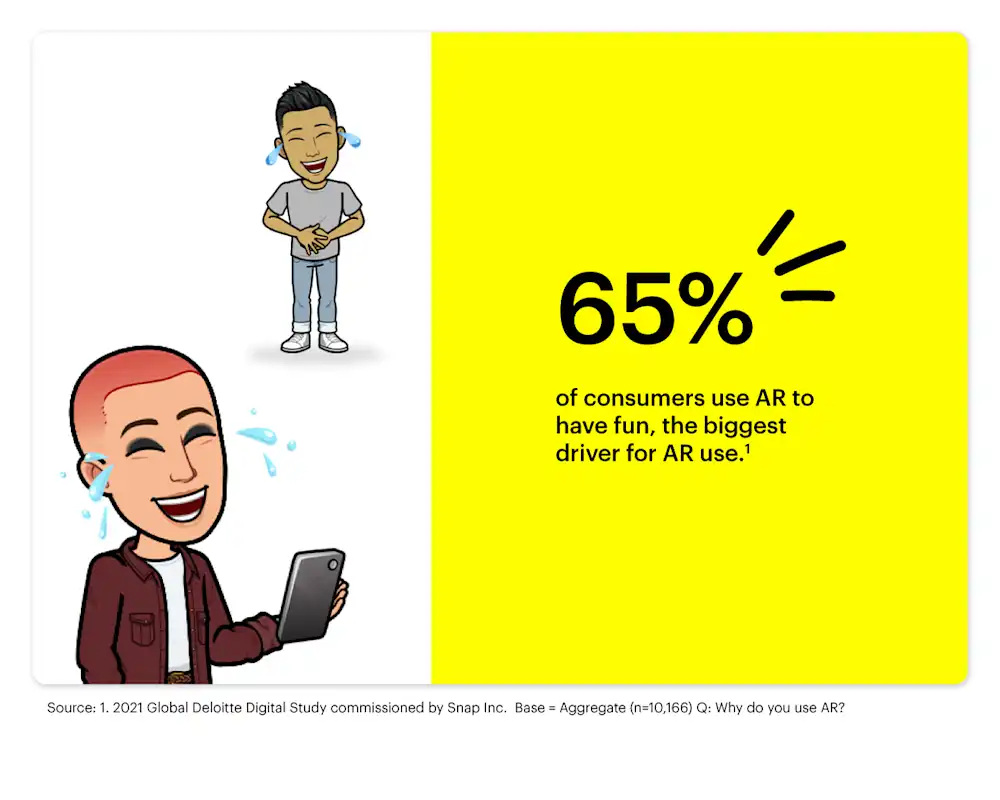
65% of AR consumers spanning countries and ages use AR to have fun. The majority are discovering AR through social / communications apps. 4
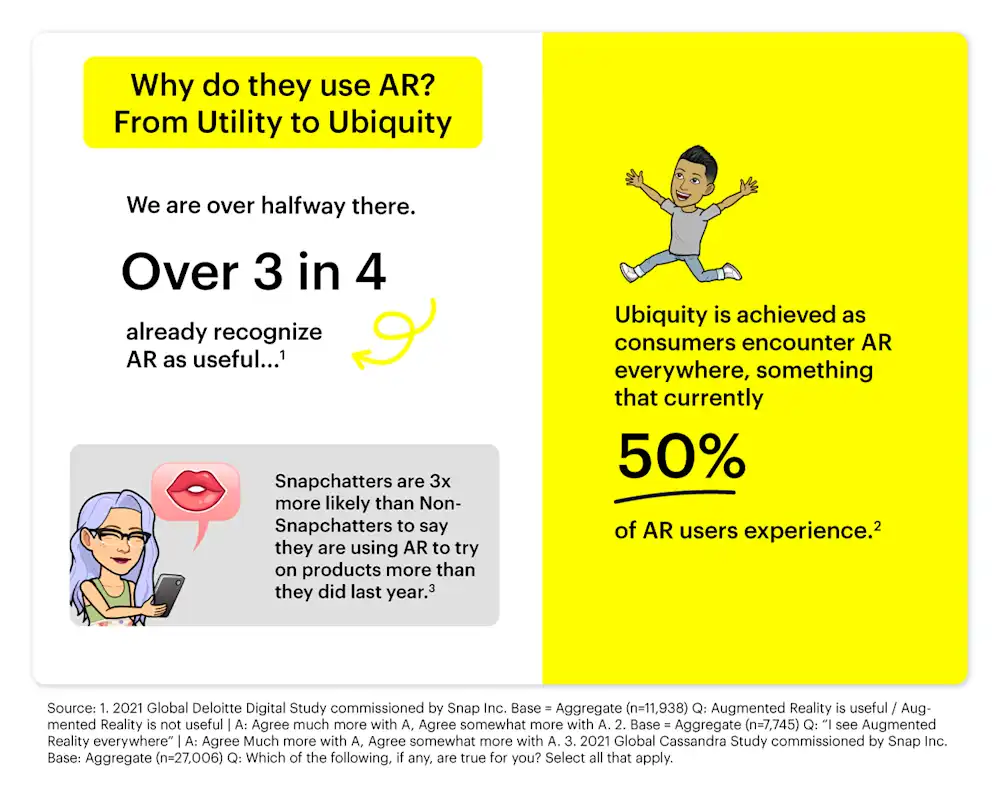
AR is generally seen as a “toy,” but 76% of people expect and desire to use it as a practical “tool” in their everyday lives. 5
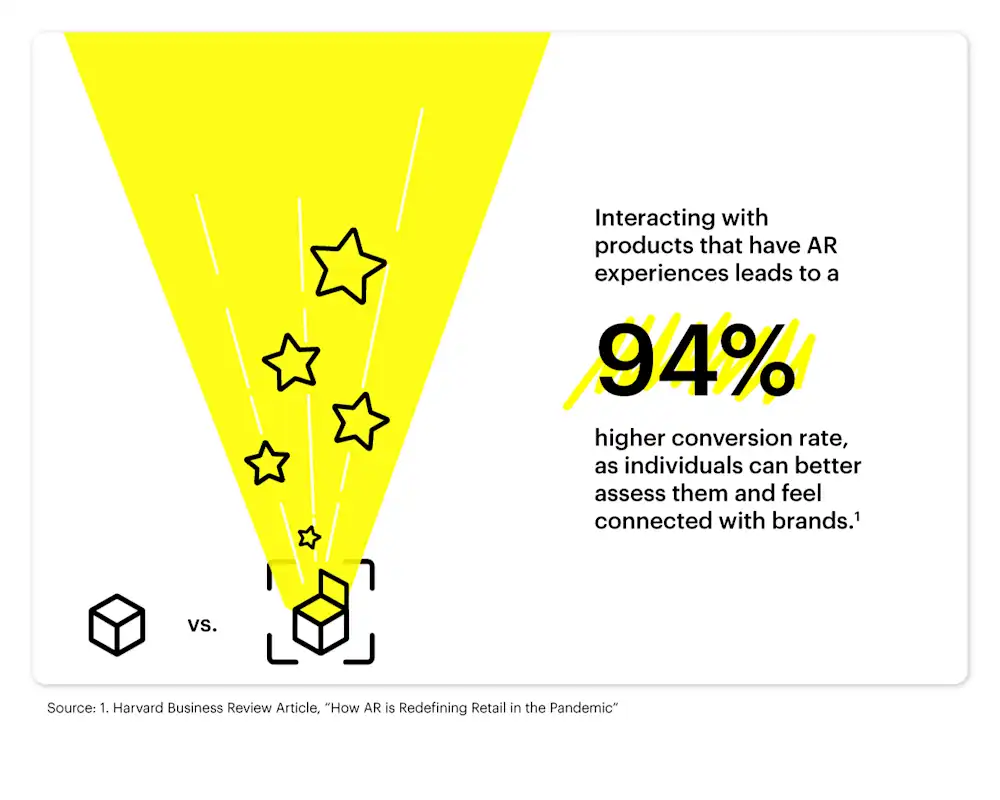
Interacting with products that have AR experiences leads to a 94% higher conversion rate. 6
AR is the leading edge, because people want to experience products and brands from the comfort of their homes and phones. And the revolution is already underway. Marketers and brands can expect the next wave to bring a full-fledged AR ecosystem. Designers and developers will become AR experts and collaborate with content platforms to refine the technology that will reshape consumer experiences. AR will be able to solve problems that have stumped brands for decades. The possibilities are as endless as the creative canvas AR enables. Brands and their partners need only embrace them.